Emperor penguins listed as endangered species by worldwide tracking organization

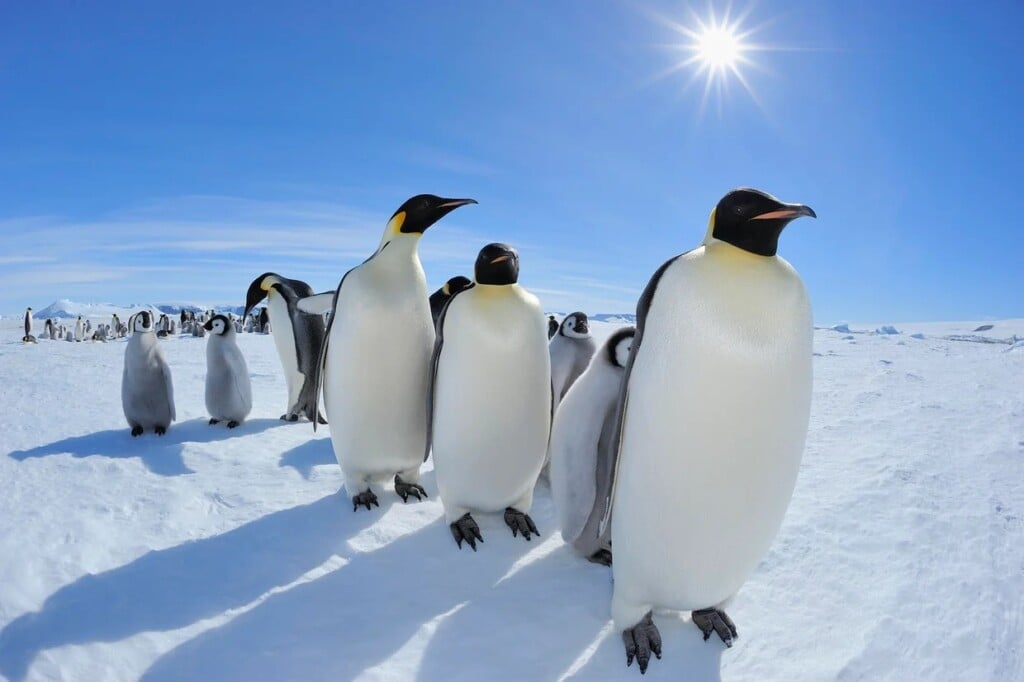
Emperor penguin with chicks, Aptenodytes forsteri, Snow Hill Island, Antartic Peninsula, Antarctica. | CBS
The emperor penguin has been declared an endangered species as climate change pushes the icon of Antarctica a step closer to extinction, the global authority on threatened wildlife announced Thursday.
Its change of status from “near threatened” by the International Union for Conservation of Nature (IUCN) underscores the existential threat to ice-dependent species as global warming profoundly reshapes the frozen continent.
Emperor penguins rely on sea ice to live, hunt and breed. The early break-up and loss of these platforms of frozen ocean water has caused their numbers to plummet.
The IUCN — a global network of scientists, governments and conservation groups — said changes in sea ice caused by climate change were expected to halve the emperor penguin population by the 2080s.
They “concluded that human-induced climate change poses the most significant threat to emperor penguins,” Philip Trathan, part of the IUCN expert group who worked on the Red List assessment, said in a statement.
The Red List of Threatened Species is maintained by the IUCN and is the world’s most comprehensive information source on the extinction status of plants, animals and fungi.
There are six classifications, from “least concern” to “extinct.” Those ranked as “endangered” are two steps below “extinction in the wild,” which denotes a species surviving only in captivity and not in nature.
The Antarctic fur seal — once hunted to near extinction by humans seeking their pelts — was also moved to the endangered category, their numbers having plunged more than 50% since 1999.
How climate change is endangering emperor penguins
“The ongoing decline is due to climate change, as rising ocean temperatures and shrinking sea ice are pushing krill to greater ocean depths in search of colder water, reducing the availability of food for seals,” the IUCN said.
The largest and heaviest of their species, boasting a brilliant golden-orange streak on the neck and chest, emperor penguins have become symbolic of the quest to thrive and survive in Antarctica’s harsh climes.
They breed on the sea ice in the dead of winter, the males relying on the flat surface to keep their eggs warm beneath their feet. The sea ice also provides a habitat for chicks and during the moulting season before they are waterproof.
But climate change is making sea ice less stable, causing its retreat or early-break up in spring.
Sea ice has been at record low levels since 2016 and the impact on emperor penguins has been well documented. Satellite imagery indicates around 20,000 adults — some 10% of the population — disappeared between 2009 and 2018 alone.
“This species is closely associated with sea ice and ice packs,” Christophe Barbraud, a scientist at French research institute CNRS, told AFP.
“However, since 2016-2017, there has been a significant decrease in the extent of sea ice around Antarctica, and therefore without sea ice, it will have great difficulty surviving.”
Trathan said emperor penguins were “a sentinel species that tell us about our changing world and how well we are controlling greenhouse gas emissions that lead to climate change.”
The IUCN also moved the southern elephant seal from “least concern” to “vulnerable” following population declines caused by a deadly contagious pathogen.