Then and Now: 1917 Flood
“We know that Chattanooga was prone to flooding before the construction of the dams on the Tennessee River, but did you know that one key flood showcased that vulnerability as the nation was a mere month away from declaring war on Germany, kicking off American involvement in World War 1.
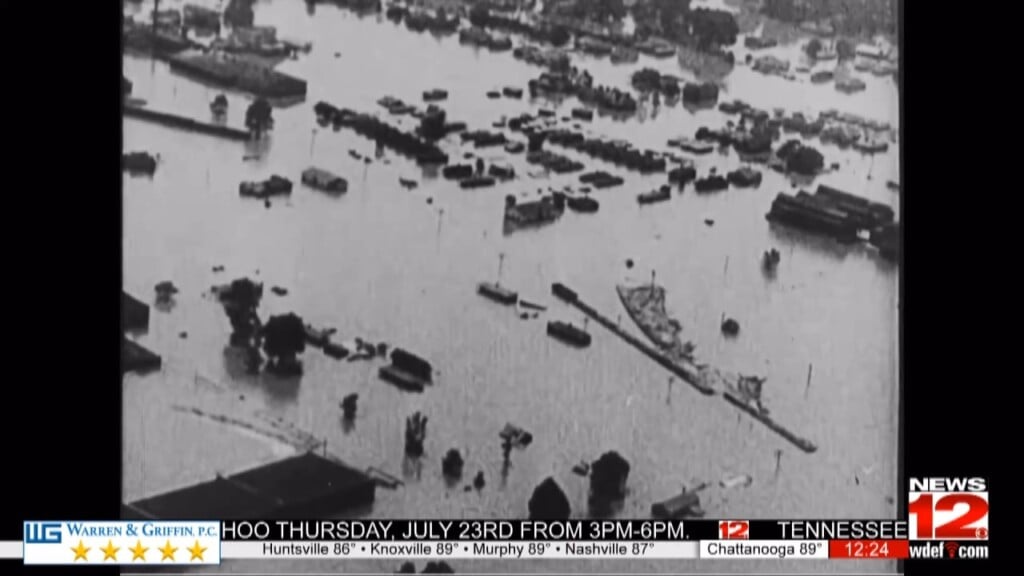
On March the 7th, 1917, a low pressure system moved across the eastern US, bringing with it torrential rain. As the rain fell, the Tennessee River began to rise, eventually cresting at almost 48 feet above flood stage.
The Chattanooga Library’s Digital photo collection archives the aftermath of the flood.
While Market street was relatively unharmed due to a grade that was added after earlier floods, other areas, particularly Orchard Knob and McCallie Avenue, were left completely under water.
From the vantage point of Cameron hill, the extent of the flooding could be clearly observed.
Some took to creative methods to navigate the now flooded streets and alleyways of Chattanooga.
The Market Street Bridge was still under construction at the time, giving an opportunity to see how well it would fare against rushing floodwaters.
Both it and the Walnut Street bridge escaped unharmed.
Damages from the flood were estimated to cost the equivalent of 6 million of today’s dollars.
This wasn’t even the worst flood that had hit Chattanooga. In 1867, as much of the south was still recovering from the devastation of the Civil War, a flood which still holds the record for highest water level struck the city.
That flood led to the raising of street levels and the creation of the legendary “Underground Chattanooga”. Which is a story for another day.
It was due to this and other floods that the TVA eventually constructed the Chickamauga and Nickajack dams, transforming the TN River from an unpredictable force of nature to a carefully controlled resource that now provides food and electricity for the entire region.